CEO, Firewize
17 Jul, 2019
In healthcare facilities, Australian Standards AS 4083 and AS 3745 set out the requirements for planning for an internal or external emergency in hospitals, aged care facilities and other patient care facilities.
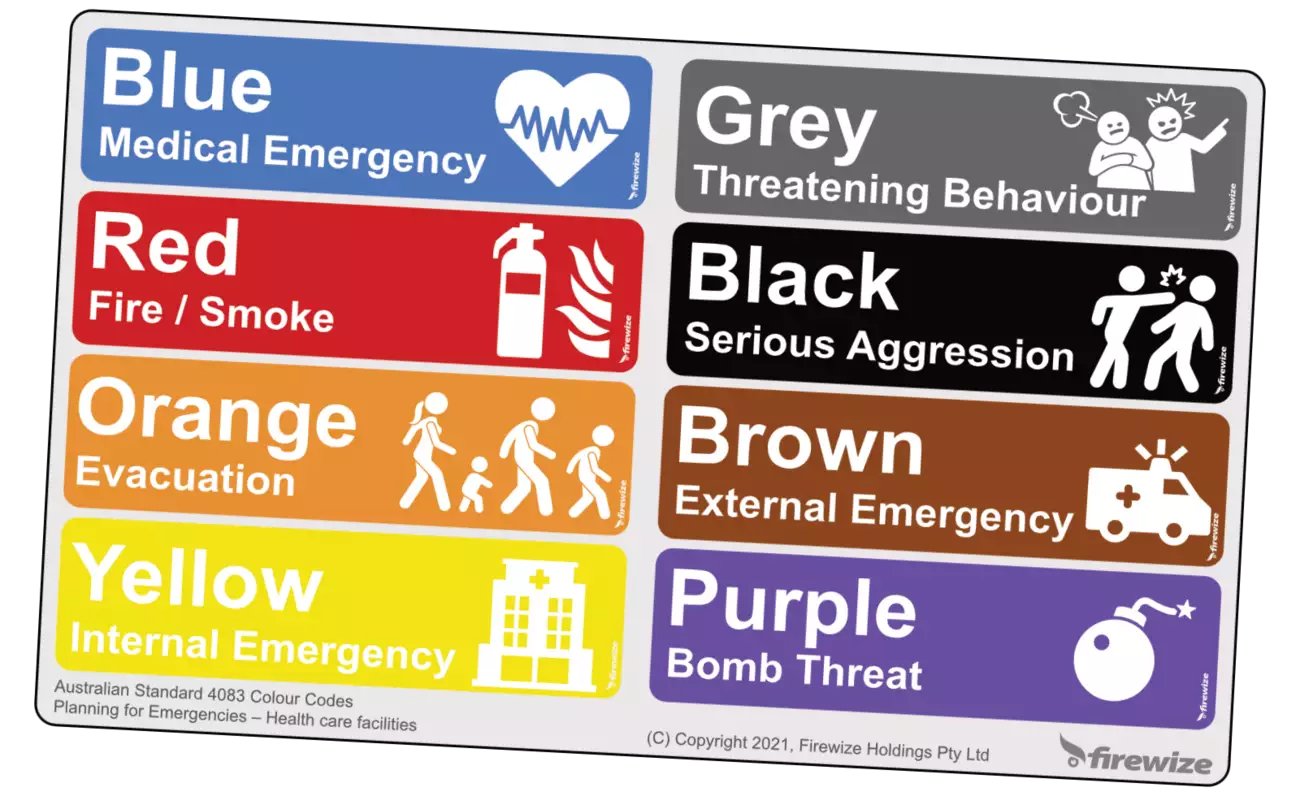
These Standards incorporate a colour code system to differentiate different types of emergencies.
This video explains this colour code system and how it fits within the emergency plan for a healthcare facility and can be used by the emergency control organisation (“ECP”).
I love feedback from the Firewize website. Not a day goes by when I don't get a message about something that we have written, or a request for more information. Today I received a message from a consultant (Tash) who asked for more information about an older article on the website titled "Healthcare - Colour Code Warning System".
Here is the question, and my response:
---------- Original Message ----------
From: Tash
Date: Tue, Apr 29, 2014 at 4:56 PM
Subject: Further info regarding colour code warning systemsHi there Russell,
Could you please email me any guidance/instructions on how to react to the colour code systems listen on your website?
I work as a hospital auditor and often hear codes over loud speaker; and feel it's best to know an appropriate response, should an emergency arise.
Many thanks,
Tash
Colour codes are an integral part of a healthcare emergency plan and are used to broadcast an emergency message. If you are part of an emergency planning committee, emergency control organisation, such as a chief warden, warden, Emergency Coordinator or other emergency officer this free gift is an invaluable resource to you.
Healthcare facilities including hospitals, nursing homes and other facilities incorporating patient care are required to develop an emergency plan or emergency procedures manual which covers internal and external emergencies.
There are two primary Australian Standards that provide a framework for developing an emergency plan for health face facilities;
How a person should respond in an emergency is set our in the emergency plan.
As the fight attendant says when they are demonstrating the safety features of an aeroplane "...subtly every aeroplane is different..." And the same is true for healthcare facilities.
In addition, the Building Code of Australia ("BCA") provides guidance about the safety systems, equipment and features of a building according to the classification of the building.
In Victoria the Department of Health & Human Services provides additional guidance (in addition to the BCA) specifically for healthcare facilities called the "Capital Development Guidelines".
The purpose of these Guidelines is to provide appropriate levels of fire safety for staff, clients and other occupants of a building subject to the Guidelines, in part by providing for appropriately accredited professionals, such as Fire Safety Engineers, Building Surveyors and Building Inspectors, to audit and assess fire risk, recommend steps to minimise fire risk, and to assess and report on acceptable standards of fire safety, in specific settings.
| Blue | Medical Emergency |
| Purple | Bomb Threat |
| Red | Smoke or Fire |
| Orange | Evacuation |
| Yellow | Internal Emergency |
| Brown | External Emergency |
| Black | Serious Aggression |
| Grey | Threatening Behaviour |